The Department of Home Affairs lists the financial aspects of a relationship as one category of information it may ask for in a partner visa application. Its examples include joint bank or credit card statements, joint leases or mortgages, and documents showing shared household expenses.
This guide explains how to bring financial documents you already have into a clear, dated structure. It does not decide what your application requires or whether particular evidence is sufficient.
Before choosing documents, check the current partner visa information from the Department of Home Affairs and the requests shown in your ImmiAccount. Requirements vary by visa stage and personal circumstances.
Start with the official categories
Home Affairs gives examples of financial material that may be relevant to a relationship, including:
- joint mortgage or lease documents;
- joint loan documents for major assets such as homes, cars or major appliances;
- joint bank account statements; and
- household bills in both names.
These are examples, not a checklist. Your relevant documents will depend on how you and your partner manage money and your living arrangements.
Gather your financial documents
Start by collecting material from the places where it is already stored. That may include online banking, email, cloud storage, utility accounts, insurance portals and tenancy records.
Possible document groups include:
- joint accounts and account statements;
- rent, mortgage, loan or property records;
- electricity, gas, water, internet or phone bills;
- insurance, superannuation or beneficiary records;
- receipts or invoices for shared purchases; and
- records of transfers or shared costs.
Keep the original files unchanged. If you create working copies for organisation, use a separate folder so you can return to the source material when needed.
Arrange documents in a consistent order
A consistent file structure makes a collection easier to review. One simple approach is:
- Sort items by date.
- Group similar records together, such as bank statements, housing records and household bills.
- Give each working copy a clear filename, for example
2026-03-electricity-account.pdf. - Add a factual note only where the document needs context, such as which address or account it relates to.
- Record the date range covered by each group so gaps and duplicate files are easier to spot.
Use factual descriptions rather than arguments about what a document proves. For example, “Electricity account for Smith Street, January–March 2026” identifies the item without making a judgment about its legal significance.
Handle statements and private information carefully
Financial records can contain account numbers, transaction details and information about other people. Store working files in a private location and limit access to the people involved in preparing the application.
Do not alter or redact official documents based only on a general article. Check the current upload instructions in ImmiAccount, and ask a registered migration agent or Australian legal practitioner if you need advice about what to include or obscure.
Connect financial records to your timeline
Dates can help you place financial records alongside other relationship milestones. A lease start date, move, shared trip or change of address may also appear elsewhere in your material. Recording those dates consistently can make the collection easier for you and your adviser to navigate.
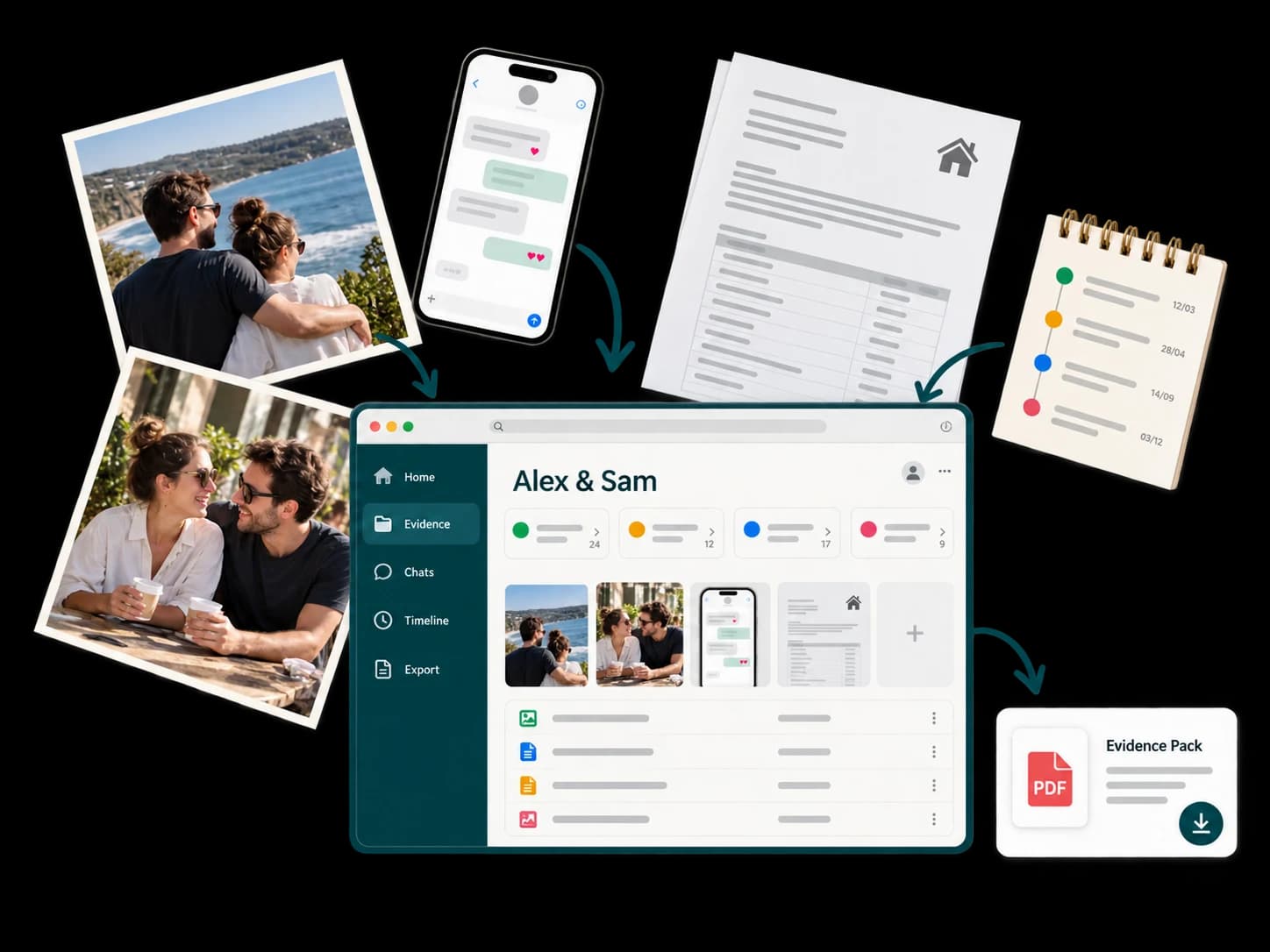
Partner Evidence is an organisation tool. It can help you collect files, add factual captions and arrange selected material into a timeline or evidence pack. It does not assess your relationship, recommend documents, or tell you whether an application meets visa requirements.
For visa-specific starting points, see the guides for subclass 820, subclass 801, subclass 309, subclass 100 and subclass 300.